





★★★★★
March 21, 2026
Excellent parts
Replaced rotors and pads on my 2017 Subaru Forester parts from A-1 . Very happy with all parts !

Replaces
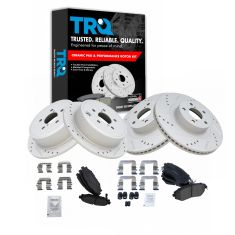
Replaces Subaru Front & Rear Ceramic Premium G-Coated Brake Pad & Rotor Kit TRQ Performance BKA12896
$304.95
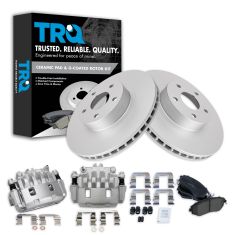
Replaces Subaru Impreza Front Ceramic Premium G-Coated Brake Pad & Rotor Kit with Calipers TRQ BKA23473
$299.95
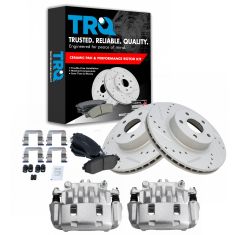
Replaces Subaru Impreza Front Ceramic Premium G-Coated Brake Pad & Rotor Kit with Calipers TRQ Performance BKA14989
$294.95
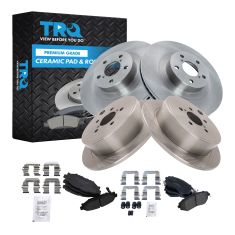
Replaces Subaru Front & Rear Ceramic Brake Pad & Rotor Kit TRQ BKA18676
$224.95
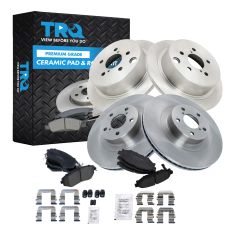
Replaces Subaru Front & Rear Ceramic Brake Pad & Rotor Kit TRQ BKA14240
$208.95
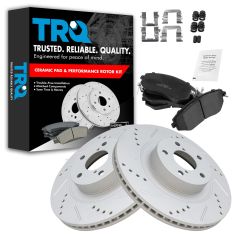
Replaces Toyota Subaru Scion Front Ceramic Premium G-Coated Brake Pad & Rotor Kit TRQ Performance BKA12806
$179.95

Replaces 2011-14 Subaru Impreza Front Ceramic Premium G-Coated Brake Pad & Rotor Kit TRQ BKA51947
$157.95

Replaces 2011-14 Subaru Impreza Front Ceramic Brake Pad & Rotor Kit TRQ BKA48138
$149.95
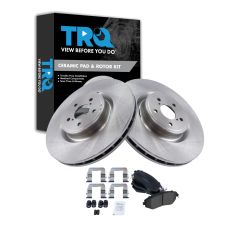
Replaces 2019 Toyota 86 Front Ceramic Brake Pad & Rotor Kit TRQ BKA48312
$144.95
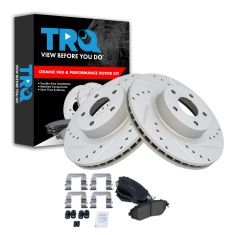
Replaces Subaru BRZ Impreza Scion FR-S Front Ceramic Premium G-Coated Brake Pad & Rotor Kit TRQ Performance BKA21065
$134.95
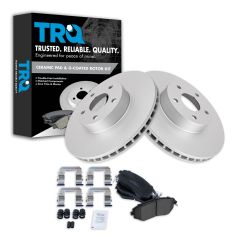
Replaces Subaru BRZ Impreza Scion FR-S Front Ceramic Premium G-Coated Brake Pad & Rotor Kit TRQ BKA23818
$129.95
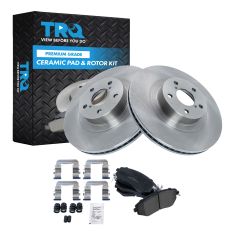
Replaces Toyota Subaru Scion Front Ceramic Brake Pad & Rotor Kit TRQ BKA11980
$112.95
Part Details
About TRQ:
TRQ is a trusted brand dedicated to making every repair a success story by combining premium parts with easy installation. Each TRQ part is engineered by a team of automotive experts to meet or exceed OEM standards, delivering enhanced performance and maximum longevity. With rigorous in-house testing, the brand ensures superior fit and function across every product line. TRQ also provides customers with best-in-class, step-by-step installation videos—so you can complete repairs with confidence, whether you're a first-time DIYer or an industry professional.
Product Features
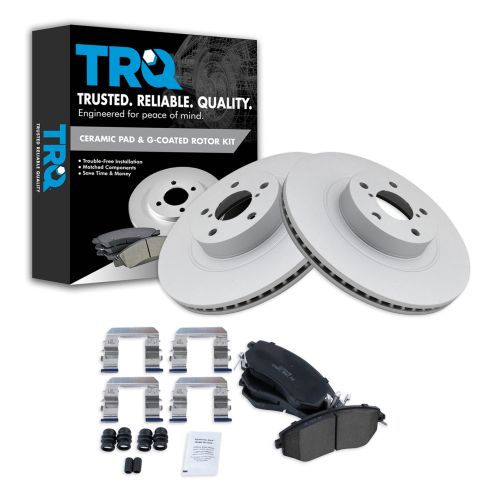
TRQ brake kits are designed to restore your brake system to like-new performance. TRQ brake pads are positive molded, thermal scorched, chamfered, and utilize a multi-layer shim for enhanced performance and service life. TRQ G-coated rotors have long-lasting rust prevention, perfect for wheels with large openings that expose the rotor and rotor hat during daily drives. All products are fit and road-tested in our Massachusetts R&D facility to ensure we deliver on our promise of Trusted Reliable Quality.
Attention California Customers:
 WARNING: This product can expose you to chemicals including Lead and Lead Compounds, which are known to the State of California to cause cancer, and birth defects or other reproductive harm. For more information, go to www.P65Warnings.ca.gov.
This part fits 29 vehicles spanning 2010-2024.
| Year | Make | Model | Description |
|---|---|---|---|
| 2013-2016 | Scion | FR-S | Scion FR-S Front Ceramic Premium G-Coated Brake Pad & Rotor Kit TRQ BKA24018 |
| 2013-2016 | Subaru | BRZ | Subaru BRZ Front Ceramic Premium G-Coated Brake Pad & Rotor Kit TRQ BKA24018 |
| 2017-2020 | Subaru | BRZ | Subaru BRZ Front without Brembo brakes Ceramic Premium G-Coated Brake Pad & Rotor Kit TRQ BKA24018 |
| 2022-2023 | Subaru | BRZ | Subaru BRZ Front Ceramic Premium G-Coated Brake Pad & Rotor Kit TRQ BKA24018 |
| 2016-2017 | Subaru | Crosstrek | Subaru Crosstrek Front Ceramic Premium G-Coated Brake Pad & Rotor Kit TRQ BKA24018 |
| 2011-2013 | Subaru | Forester | Subaru Forester Front Ceramic Premium G-Coated Brake Pad & Rotor Kit TRQ BKA24018 |
| 2014-2018 | Subaru | Forester | Subaru Forester 2.5i Front Ceramic Premium G-Coated Brake Pad & Rotor Kit TRQ BKA24018 |
| 2014-2018 | Subaru | Forester | Subaru Forester 2.5i Premium Front Ceramic Premium G-Coated Brake Pad & Rotor Kit TRQ BKA24018 |
| 2014-2018 | Subaru | Forester | Subaru Forester 2.5i Touring Front Ceramic Premium G-Coated Brake Pad & Rotor Kit TRQ BKA24018 |
| 2014-2018 | Subaru | Forester | Subaru Forester 2.5i Limited Front Ceramic Premium G-Coated Brake Pad & Rotor Kit TRQ BKA24018 |
| 2010 | Subaru | Impreza | Subaru Impreza WRX Premium From 4/01/10 Production Date Front Ceramic Premium G-Coated Brake Pad & Rotor Kit TRQ BKA24018 |
| 2010 | Subaru | Impreza | Subaru Impreza WRX Limited From 4/01/10 Production Date Front Ceramic Premium G-Coated Brake Pad & Rotor Kit TRQ BKA24018 |
| 2010 | Subaru | Impreza | Subaru Impreza 2.5 GT From 4/01/10 Production Date Front Ceramic Premium G-Coated Brake Pad & Rotor Kit TRQ BKA24018 |
| 2010 | Subaru | Impreza | Subaru Impreza WRX From 4/01/10 Production Date Front Ceramic Premium G-Coated Brake Pad & Rotor Kit TRQ BKA24018 |
| 2011-2014 | Subaru | Impreza | Subaru Impreza WRX Front Ceramic Premium G-Coated Brake Pad & Rotor Kit TRQ BKA24018 |
| 2011-2014 | Subaru | Impreza | Subaru Impreza WRX Limited Front Ceramic Premium G-Coated Brake Pad & Rotor Kit TRQ BKA24018 |
| 2011-2014 | Subaru | Impreza | Subaru Impreza WRX Premium Front Ceramic Premium G-Coated Brake Pad & Rotor Kit TRQ BKA24018 |
| 2013-2014 | Subaru | Legacy | Subaru Legacy 2.5i Front Ceramic Premium G-Coated Brake Pad & Rotor Kit TRQ BKA24018 |
| 2013-2014 | Subaru | Legacy | Subaru Legacy 2.5i Premium Front Ceramic Premium G-Coated Brake Pad & Rotor Kit TRQ BKA24018 |
| 2013-2014 | Subaru | Legacy | Subaru Legacy 2.5i Limited Front Ceramic Premium G-Coated Brake Pad & Rotor Kit TRQ BKA24018 |
| 2014 | Subaru | Legacy | Subaru Legacy 2.5i Sport Front Ceramic Premium G-Coated Brake Pad & Rotor Kit TRQ BKA24018 |
| 2013-2014 | Subaru | Outback | Subaru Outback 2.5i Premium Front Ceramic Premium G-Coated Brake Pad & Rotor Kit TRQ BKA24018 |
| 2013-2014 | Subaru | Outback | Subaru Outback 2.5i Front Ceramic Premium G-Coated Brake Pad & Rotor Kit TRQ BKA24018 |
| 2013-2014 | Subaru | Outback | Subaru Outback 2.5i Limited Front Ceramic Premium G-Coated Brake Pad & Rotor Kit TRQ BKA24018 |
| 2013-2015 | Subaru | XV Crosstrek | Subaru XV Crosstrek Front Ceramic Premium G-Coated Brake Pad & Rotor Kit TRQ BKA24018 |
| 2017-2018 | Toyota | 86 | Toyota 86 Front Ceramic Premium G-Coated Brake Pad & Rotor Kit TRQ BKA24018 |
| 2019-2020 | Toyota | 86 | Toyota 86 GT Front without Brembo brakes Ceramic Premium G-Coated Brake Pad & Rotor Kit TRQ BKA24018 |
| 2019-2020 | Toyota | 86 | Toyota 86 Base Model Front without Brembo brakes Ceramic Premium G-Coated Brake Pad & Rotor Kit TRQ BKA24018 |
| 2022-2024 | Toyota | GR86 | Toyota GR86 Front Ceramic Premium G-Coated Brake Pad & Rotor Kit TRQ BKA24018 |
| Brand Label | Part Number |
|---|---|
| Raybestos Brakes | EHT1539H |
| Aimco | 31407 |
| Subaru | 26296SC011 |
| Subaru | 26296SC010 |
| Scion | SU00304678 |
| Subaru | 26296SC000 |
| Raybestos Brakes | MGD1539CH |
| Subaru | 26296AJ02A |
| Toyota | SU00304089 |
| Subaru | 26296FJ030 |
| Raybestos Brakes | SGD1539C |
| FMSI | CD1539 |
| Subaru | 26296FJ020 |
| Scion | SU00304089 |
| Raybestos Brakes | 980360R |
| DuraGo | BR900496 |
| Raybestos Brakes | 980360 |
| Raybestos Brakes | 980985FZN |
| Raybestos Brakes | 980360PER |
| Raybestos Brakes | 980360P |
| Raybestos Brakes | 980360FZN |
| Bendix | PRT5657 |
| Raybestos Brakes | 980985R |
| Raybestos Brakes | 980985 |
| Raybestos Brakes | 980985P |
| Wagner | BD126192 |
| Sangsin Brake | SP1553 |
This item may be interchangeable with parts from other brands with the above part numbers. This information is provided only for reference and does not guarantee that the item you are purchasing is identical to parts with part numbers from the brands listed above. To confirm that this item fits your vehicle, use the above "Check Vehicle Fit" option.
Lifetime Warranty
This item is backed by our limited lifetime warranty. In the event that this item should fail due to manufacturing defects during intended use, we will replace the part free of charge. This warranty covers the cost of the part only.
FREE Shipping is standard on orders shipped to the lower 48 States (Contiguous United States). Standard shipping charges apply to Hawaii and Alaska.
Shipping is not available to a P.O. Box, APO/FPO/DPO addresses, US Territories, or Canada for this item.
Expedited is available on checkout to the United States, excluding Alaska, Hawaii.
Final shipping costs are available at checkout.

Created on:
Tools used
Hi, I’m Mike from 1A Auto. We’ve been selling auto parts for over 30 years!
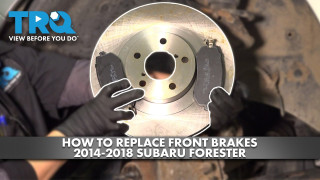
In this video, we'll be replacing the front brakes on a 2015 Subaru Forester. If you need these parts or other parts for your vehicle, click the link in the description and head over to 1aauto.com.
I'm going to take this tire off. Before I lift it up off the ground, I'm going to break the lug nuts free. I'm going to use a 19mm socket and a breaker bar. Just break them loose. All right, with the tire up in the air, then I can take the tire off.
Okay, now I'm going to take these two caliper bolts off. I'm going to use a 14mm wrench. Before I loosen this one up all the way, I'll loosen the top one just like that. Take these bolts out. All right, so we're going to pull this caliper off. I can take a flat blade screwdriver and just pry in here a little bit. I'm going to pull out to compress the piston a little, and then we can pull the caliper off just like that.
I'm going to use a bungee cord to hold it up. Go through the caliper hole and then over here. That'll keep the pressure off the brake line. We'll just set that out of the way. All right, now we're going to take out the pads. Sometimes you need a screwdriver to pry them out a little bit. Pull that pad out. Then we'll pull the inboard pad out.
Next we're going to take these caliper bracket bolts out. They're 17mm. So I'm going to use a 17mm socket and a ratchet. We'll take these out. For the top one, I had to use a wrench because the socket would not fit in this area because it was hitting the strut bolt. All right, so we'll take the bottom bolt out. This would be easier if you had a ratchet wrench to get the top one out because you'd fit it in there better. Pull that bolt out. Okay, and pull the bottom one out. Now we can pull the bracket right off the rotor.
So to get the rotor separated from the hub, what we can do is we can take a hammer and hit right around in these areas. We actually sell this hammer at 1aauto.com. But in addition to that, there's these two little screw holes that you can thread some bolts. You'll have to find some bolts that fit. Whoops. So we'll thread this bolt here and thread this bolt here. I'll take a ratchet. I'm just going to snug these up a little bit. I'm not going to put too much pressure on them. Just wait till it gets snug, just put a little bit of pressure on, and then we'll do this the same to this one. And then I can just take my hammer and give it a tap. If I have to, I can tighten this up some more, and it's pulling the rotor right up just like that, and then the rotor comes off. All right.
We're going to clean this caliper bracket up. You can take a wire brush and just go like this. Clean up the pad slides. You can use a smaller wire brush to get in there a little better. Get some of the rust and corrosion out of here. We can take this pad slide off. Use a screwdriver. Get underneath there and pull that off. There's a little bit of rust and corrosion under here. Just take the wire brush and clean this area.
Take the smaller wire brush and get right in there. On the back of the pad guide, we can just clean this a little bit. This isn't that bad, so just wipe it a little bit. Just get a little of the rust off. We can reinstall this, and then do the same for the other side.
We're going to pull these caliper guide pins out. Pull that out. We're going to spray it down with a little brake parts cleaner. And use a rag and wipe it down. Then before we put it back, we're going to spray some brake parts cleaner into the caliper bracket. Clean this out a little bit. Drain that out. Then we're going to take some caliper grease, brake caliper grease, put it on the pin, and then we can put the pin back in. Make sure the boot goes over the pin just like that, and we'll do the same for the other side. All right.
So before we put our rotor on, we're going to want to take a wire brush or some sandpaper and clean this hub surface up. There's a lot of rust and corrosion on here. Take a smaller wire brush and get in here. All right, I'm just going to install the rotor backwards for a second because I'm going to spray the back side of the rotor with some brake parts cleaner and wipe it down with a rag.
There's a coating on the rotors, so that it does not corrode while it's sitting on the shelf. So now we'll flip it around. Now we'll spray this side of the rotor and wipe it down. Next we can install our caliper bracket and slide it over the rotor. And then with our bolts, we're going to slide them in the back side. We're going to torque these caliper bracket bolts. I'm going to use a 17mm socket and an extension with a torque wrench. We sell this torque wrench at 1aauto.com.
The reason for the extension is I can't get in there because of the strut bolts. And we're going to torque these to 59 ft-lbs. So that's good. For the bottom one, I'll take the extension off. And they're good. All right, so we're going to take a little bit of brake grease, and put it on the ends of these brake pads and on the side. This side, and the same on this side, and on there. Do not get the grease on the pad friction material.
All right, so we'll start with the outside. Put this one down. All right, so this little tab is going to come out a little bit. That's going to ride right along here, so we'll push that right there, and then it's just going to slide in there right like that. So that pushes on the outside.
Now we'll take our bungee cord off the caliper and set that aside. Take our caliper and flip it upside down here. A little bit of rust in there. Shake that out. So I'll take one of the old brake pads and slip it right here. Then I can use a caliper compressing tool. You can buy these at 1aauto.com. This is only a single piston caliper tool, but if you use the brake pad, we can alternate back and forth to get it to go down. Just slowly compress the caliper. You could also use some channellock pliers or a C-clamp to get these to compress.
All right, now the caliper's compressed all the way. Pull this brake pad off. Make sure that the hose is not twisted the wrong way, and you can slide the caliper back onto the bracket. Now we can reinstall the caliper bolts—the bottom one and the top one. All right, I'm going to use some small locking pliers to prevent the caliper guide pin from spinning, and I'm going to use a 14 mm socket and a torque wrench, and I'm going to torque these bolts to 20 ft-lbs. I'll do the same for the bottom. Use some locking pliers and this guide pin.
Then we're going to put the tire up. Put the lug nuts on. We'll just snug these up by hand before I lower the vehicle. All right, so I'm going to use a 19mm socket and a torque wrench. We're going to torque these lugs down to 89 ft-lbs, and I'm going to do it in a star pattern so that the wheel gets torqued down evenly. All right, before we take the vehicle and take it for a ride, we're going to want to pump the brake pedal, because what's happening is there's an air gap between the brake caliper piston and the brake pad, so when we pump the pedal, that's pushing fluid back down to the calipers and getting rid of that air gap. And the brake pedal, once the brake pedal feels good, then you're good to go.
Thanks for watching. Visit us at 1AAuto.com for quality auto parts, fast and free shipping, and the best customer service in the industry.
Tools used
Hi, I’m Mike from 1A Auto. We’ve been selling auto parts for over 30 years!
Use a breaker bar, 19 millimeter deep socket to loosen the lug nuts of the vehicle on the ground. This way the wheel's not turning on you. Get them nice and loose. Raise and support the vehicle. With the lug nuts loose, I'm just going to use the socket and take them off the rest of the way and remove the tire and wheel. Take the entire wheel off and put this aside. Just going to turn the wheel so the brake caliper is facing out and I can get to it easier.
Use a flat-bladed screwdriver. Just going to slide it in here. Just pry the caliper outwards. It's going to compress the piston. And do it to both, because this is a double piston caliper. So we just want to loosen it just enough. It'll make it easier to slide this off of the pads. And you remove the top and bottom caliper slide pin bolts. 14 millimeter, we'll start with the top one. Get that loose, same for the bottom one. Get that loose and take them both out. Slide the caliper off. Take our bungee cord, and let's see. That should work. Up and around the coil spring. Came undone. Hang right there. Pull our pads out. Can wedge a flat-bladed screwdriver in there and help you pry it out.
We're not reusing these. There's an upper and lower caliper bracket bolt. They are 17 millimeter. We'll start with the lower one. It's on there pretty tight, so I'll readjust the wrench here. We'll use a dead blow mallet and break it free. Do the same to the top one. Going to switch to a 17 millimeter socket and ratchet, make this go quicker. Put the bracket aside. Let's place some rust penetrate in here. And hit these threaded openings here and down the studs. Thread a lug nut on here because we're going to tap the rotor with a dead blow to break it free. Alright, doesn't want to move. I'm going to use these pusher holes here. It's an 8x1.0 thread pitch. Just find some appropriately sized bolts to thread in there. They're metric. Just going to use the socket that fits them and just evenly tighten them. And this is just going to push the rotor right off the hub. Easy.
Here's our original brake rotor from our vehicle. These are the original pads. The brand new pads from 1AAuto.com. And you can see on these, take our brake pad measurement tool. The new ones have 10 millimeter, and the worn ones have 5 millimeter. They're roughly half worn. Not too bad, but we're going to replace them anyways. These are an exact match. I've got inside and outside here. Take these, they're an exact match for the wear indicators on them. Those will fit great and work great.
We look at our rotors. The original rotor has a black coating on the hub to prevent rust. It does wear off as brakes do get hot. So the paint does eventually wear down and it will begin to rust. However, we've got these E-coated rotors from 1AAuto.com. So they do paint the hub. They paint the edge, to prevent rust. Off course, this will always rust because it's bare metal where your brake pads ride. But that is an exact match for the factory rotor, it'll fit great and work great for you. Then we also have available these drilled and slotted rotors. These have a zinc coating so they don't rust. You can kind of see the difference.
Zinc coating right now is over the entire surface. It will wear off where the brake pads ride, so these will flash rust, but you can kind of see the difference in a raw metal and a zinc coated here. So this also is to prevent rust and these will look cooler on a vehicle. But everything will fit exactly the same as factory and work great. Just going to check the slide pins. These move and out real nicely, I'm not going to mess with them. They're working perfectly. If they were sticking, you could pull them out of the rubber boots and clean and lubricate them, but since these are working great, I'm going to leave them alone.
Caliper hardware is stainless. And to be re-used, we're just going to clean it, put some brake parts cleaner and a wire brush. And just do the same for both sides of the caliper bracket. We're going to use our drilled and slotted rotors. These can go on in either direction. The veins inside are straight. They are not left and right. But you can pick which direction you want these to go. We're going to put them towards the front. I'm going to put it on backwards first. Just make sure the braking surface is clean. I'm using brake parts cleaner. Wipe down anything with a rag. Any packaging oil that might be on these. Take them off for a second. I'm just going to clean this hub up—it's not too rusty. Spray a little bit of brake parts cleaner and wipe it down. I'm going to take some copper anti-seize, just put it on the hub surface here where the rotor will touch and could potentially rust on.
So just for future service, we'll make sure the rotor can come off easily. Install the rotor the proper way, take the lug nut, and thread that down so it can't fall off. I'm using brake parts cleaner, make sure the surface stays nice and clean, free of grease and dirt. You can also buy new caliper bracket bolts from 1A Auto. This one here is really rusty and gross and the top one wasn't too bad, but we've got two brand new ones and we're going to install those. I'll put a little bit of copper never seize on these bolts, prevent corrosion. Do the top one first. So the rotor is kind of out of place, I'm going to have to push it in. I'll just slide the bracket over first and get that lined up. I'm going to reach over, move the bracket around, find where it bolts in. Do the same for the bottom one, and I have the top bolt started. Get those threaded down. Tighten these down with my socket and ratchet.
There is a lock washer that will start to compress. Go down evenly and we'll put the box wrench on here and they're already pretty tight. Put them down. Nice and tight and a quarter turn more, like that. These do have a lock washer, so once that lock washer's compressed, it won't back out. Going to make sure that these pads stay nice and clean, you don't get any grease or oil or dirt on them. Just give them a quick spray with brake parts cleaner, you don't need to soak the pad, put a little bit of caliper grease on the gears. This will help them slide on the hardware. Brake pads are curved, so that outer is going to match the outer curve on the brake rotor. You don't want to try to install them backwards. The wear indicators go towards the bottom.
Install the rear pad, the inside pad. Push it in place. Going to take our old pad, put it inside the caliper. We'll take our c-clamp, look at the set up, and you're gently compressed the pistons back into the caliper. Press these in. Get this in the middle. Those are compressed in and should slide right over our pads. Slide pin bolts do have flat sides to them, they have curved and flat. The flat's going to sit like that, same for both upper and lower.
Reinstall the slide pin bolts. Just tighten these down. Get them tight, give them a little bit more, don't want to break them, they're just small bolts. So that moves nice, in and out on the slides. Used the lug nut to keep this rotor from falling off, just make sure you take it off before you try to put the wheel and tire on.
Wheel and tire on. Start lug nuts by hand. Just going to use the socket, thread these all down, then I'll put the vehicle on the ground and torque them. Going to torque the lug nuts to 89 foot pounds and in a cross pattern. Now we need to gently pump the brakes to move the pistons out to meet the pads, not going to press it all the way to the floor. Press it about a quarter of the way, build it up. They'll start to get harder. That's perfect. Now the brake job is done.
Thanks for watching. Visit us at 1AAuto.com for quality auto parts, fast and free shipping, and the best customer service in the industry
Replaced rotors and pads on my 2017 Subaru Forester parts from A-1 . Very happy with all parts !
Fits. good price, quality product. Prompt delivery
Get deal on front and rear brake pads and rotors. Everything looked and works great after installing.
This brake kit is top notch and included hardward others leave out. Quick shipping. Rotors were coated and the pads were a perfect fit. I would buy again.
I love the quality, the job was effortless, I had a caliper slide that was rusted, but the kit came with the caliper slide boots so I was able to heat it, remove it, clean and lube them, replaced all the slide boots, and put it all back together with confidence. The key was I had everything I needed, thank you!
This front brake kit fit the Forester perfectly and quality was great.
Great brakes at a great value! I'm so glad I finally sprung for the coated as the old ones used to rust and look awful... these work and look beautiful!
