
★★★★★
February 7, 2026
Awesome
it was perfect fit with on time shipping

Replaces





Part Details
Specifications
About TRQ:
TRQ is a trusted brand dedicated to making every repair a success story by combining premium parts with easy installation. Each TRQ part is engineered by a team of automotive experts to meet or exceed OEM standards, delivering enhanced performance and maximum longevity. With rigorous in-house testing, the brand ensures superior fit and function across every product line. TRQ also provides customers with best-in-class, step-by-step installation videos—so you can complete repairs with confidence, whether you're a first-time DIYer or an industry professional.
Product Features
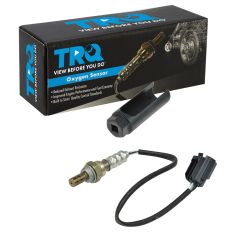
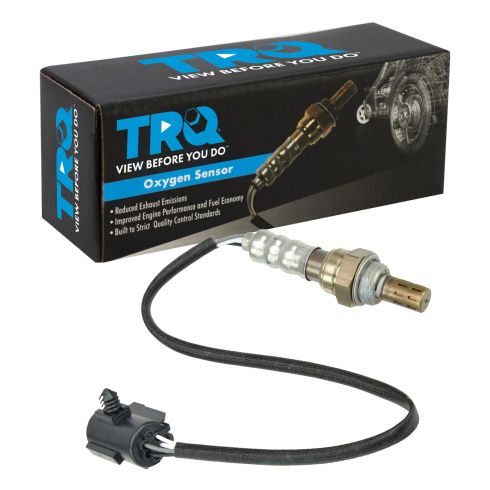
TRQ oxygen sensors are manufactured to precise specifications using premium raw materials to optimize your vehicle’s emission system. Each sensor is isostatically-pressed for improved strength and durability, and plasma-sprayed to improve sensitivity and prolong the service life of the sensors. Oxygen sensors wear out over time and should be replaced every 60,000 miles to prevent poor engine performance. TRQ recommends replacing the oxygen sensors in sets to optimize fuel economy and reduce overall emissions. All products are fit and road-tested in our Massachusetts R&D facility to ensure we deliver on our promise of Trusted Reliable Quality.
What is Upstream vs. Downstream?
Install Tip: You may be required to reset the vehicle computer after installation of this part.
Returns: Parts with electrical components cannot be returned once installed.
Attention California Customers:
 WARNING: This product can expose you to chemicals including Lead and Lead Compounds, which are known to the State of California to cause cancer, and birth defects or other reproductive harm. For more information, go to www.P65Warnings.ca.gov.
Lifetime Warranty
This item is backed by our limited lifetime warranty. In the event that this item should fail due to manufacturing defects during intended use, we will replace the part free of charge. This warranty covers the cost of the part only.
Returns: Parts with electrical components cannot be returned once installed.
FREE Shipping is standard on Orders shipped to the lower 48 States (Contiguous United States). Standard shipping charges apply to Hawaii, Alaska and US Territories. Shipping is not available to Canada.
Expedited is available on checkout to the United States, excluding Alaska, Hawaii and US Territories as well as P.O. Boxes and APO/FPO/DPO addresses. Final shipping costs are available at checkout.

Created on:
Tools used
Hi, I'm Mike from 1A Auto. We've been selling auto parts for over 30 years. We're dedicated to delivering quality auto parts, expert customer service, fast and free shipping, all backed by our 100% satisfaction guarantee. Visit us at 1AAuto.com, your trusted source for quality auto parts.
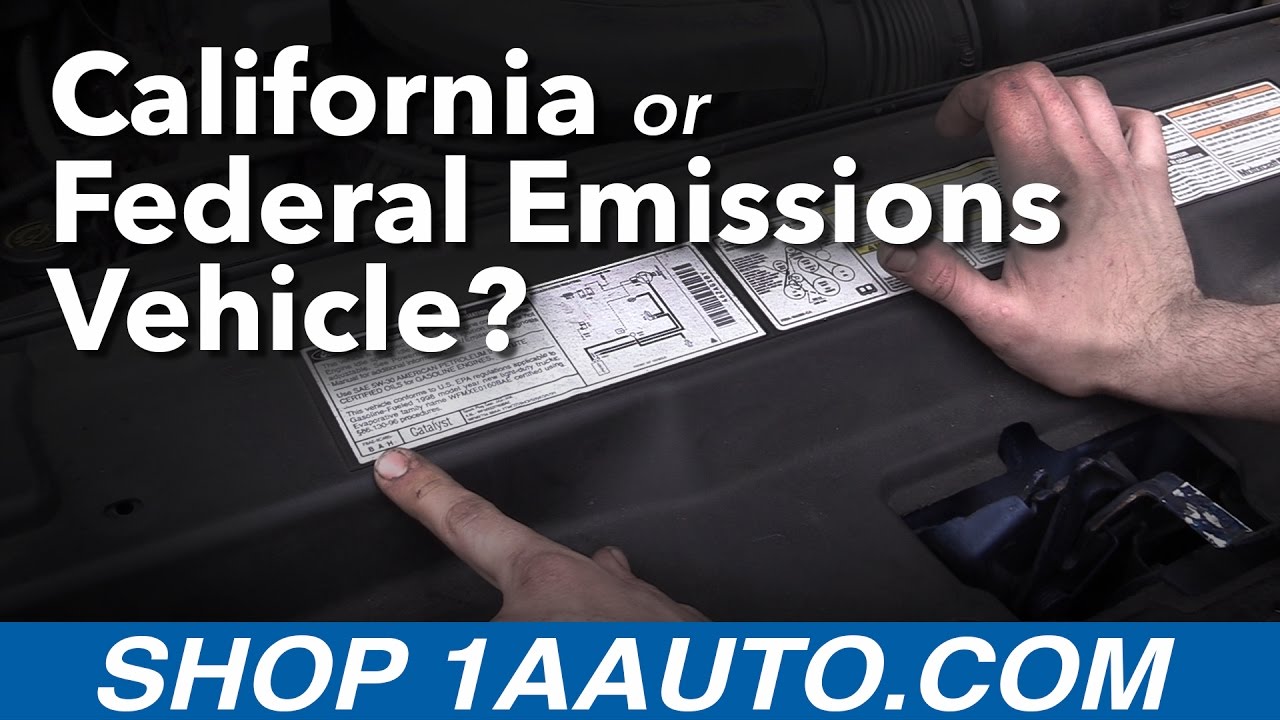
Determining whether or not your vehicle is a California emissions or a federal emissions vehicle is pretty straightforward. To do this, you'll want to locate your catalyst sticker under the hood of your vehicle. It'll either be actually on the bottom side of the hood, most GM vehicles have it on the air box, and other vehicles may have it along your radiator support at the front of the engine bay.
All you need to do is see, "This vehicle conforms to California regulations." That means that this vehicle is a California emissions car. Just because you're not in California or are in California doesn't necessarily mean your vehicle will be one way or the other.
Now, our F150 has it down here on the radiator's support, right at the front of the engine bay and you can see here, "This vehicle conforms to US EPA regulations." This means that this vehicle is a federal emissions.
Now, here we have two things that are a little different. Our catalyst is located on the vehicle's air box and this vehicle conforms to US EPA regulations and California regulations. If it conforms to both federal and California emissions, it's considered a California emissions vehicle.
Thanks for watching. Visit us at 1AAuto.com for quality auto parts, fast and free shipping, and the best customer service in the industry.
Tools used
Hi, I'm Mike from 1A Auto. We've been selling auto parts for over 30 years. We're dedicated to delivering quality auto parts, expert customer service, fast and free shipping, all backed by our 100% satisfaction guarantee. Visit us at 1AAuto.com, your trusted source for quality auto parts.
In this video I have a couple of oxygen sensors with me. While there are some aesthetic differences here, the wire lengths are a little different, the actual body and tip of the sensor are a little different, the threads and gasket are the same, and on the other end the connections are actually the same. I can plug these into either position on our vehicle. But if I had to ask you which one's upstream and which one's downstream, you probably can't tell just from looking at them. That's true of most oxygen sensors. The way you determine whether or not an O2 sensor is upstream or downstream is all done visually.
Your oxygen sensor position can be determined relative to your catalytic convertor. As the name suggests, upstream sensors will be located upstream or ahead of, in front of, above, closer to the engine than your catalytic convertors. This means that they see the exhaust gasses first. They then go through the catalytic convertor and to the downstream oxygen sensor, which will either be located in the catalytic convertor like our vehicle here, or after the catalytic convertor to monitor the gasses coming out of the cat and make sure that it's being efficient relative to the readings of the upstream O2 sensor.
The other determination you need to make is bank one versus bank two. Determining which bank is which can be done by looking at a picture of your vehicle's firing order. Whichever bank contains cylinder one is going to be bank one, and the other one, regardless of whether or not cylinder two is in it, is going to be bank two by default. These banks are true of V engines like V8s, V6s, and flat engines like Porsches and Subarus that have individual banks.
On inline four-cylinder engines, as long as they have one exhaust manifold like a Jeep four-liter or a four-cylinder Honda engine, you'll only have one bank with an upstream and downstream O2 sensor. There will be no bank two on the engine.
On our vehicle here, this is the passenger side, which we've already determined from the firing order is bank one. We have our upstream sensor here closest to the engine ahead of the cat. Then we have our downstream or sensor two here inside of the catalytic convertor. This could also be located somewhere after the cat. Here I have my two sensors for the vehicle. While they are aesthetically different, we can now tell this is my upstream sensor because it looks just like the upstream sensor I have up there. This is my downstream sensor. Now that we know which one's which, we can order the right part, correct the problem, and fix you up right.
Thanks for watching. Visit us at 1AAuto.com for quality auto parts, fast and free shipping, and the best customer service in the industry.

OSA61316
it was perfect fit with on time shipping
On my 97 ram 1500 with the 318 I had to clip off one of the plastic clips to get it to align properly and snap in. After that fit perfect and check engine light went away and stayed away.
Just what was needed to repair my vehicle. It arrived in a timely manner and fit perfectly. There was no need to contact 1A auto for any issues whatsoever. I recommend them for your auto repair as they stand behind all their products. Thanks
Good product
I first ordered these from another vendor based on the same information i sent your company. They were of course the wrong ones. I had to send them back and that took a few weeks to get straightened out. Love your customer service and fast shipping. Thank you, Larry Hill
Shipping was accurate and on time. exact fit and took care of my problem.
After spending a couple of weeks watching the codes indicating that the down stream O2 sensor was not reading correctly I shopped around and found this. I paid about half of what I would have locally and the quality was better than I found down the street. It was easy to install and fixed my problem.
The sensor was the correct part, but I had to make modifications to the connector to fit the harness even though it was stated to be a direct fit for 96 Dodge Intrepid.
Sensor described as to fit up and downstream location. Not true. I tried to replaced my upstream sensor and the connector did not fit. Policy said no returns accepted after the box is opened so I send it to the trash can. Didn't have time to send and wait for a replacement. Result: money and time lost. I bought the part locally and replaced in my car. Shipping and price was fine. Only and most important thing, the part, was wrong.
Timely delivery, worked as expected. Threads had pre-applied anti-seize which was a nice added touch.
that should be the downstream sensor located after the catalytic converter.
This part is listed to fit the upstream location on some vehicles and the downstream location on others. Please check the vehicle fit list to determine if this will fit your particular application.
