
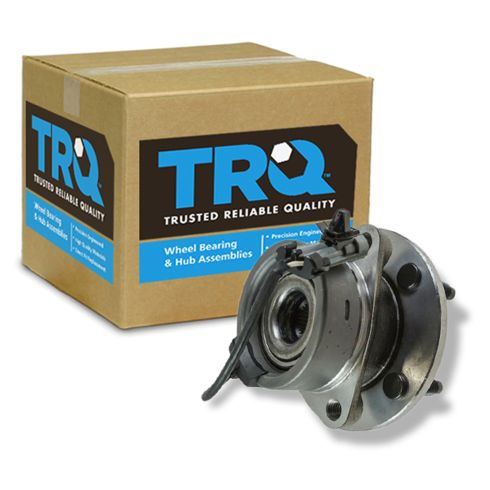
Replaces
BHA53987
This part doesn’t fit a . Select from parts that fit.
Specify your vehicle's year, make and model to guarantee fit.
This part does not fit a .
Buy in the next and
Frequently bought together
Specify your vehicle's year, make and model to guarantee fit.
This part does not fit a .
Part Details
About TRQ:
TRQ is a trusted brand dedicated to making every repair a success story by combining premium parts with easy installation. Each TRQ part is engineered by a team of automotive experts to meet or exceed OEM standards, delivering enhanced performance and maximum longevity. With rigorous in-house testing, the brand ensures superior fit and function across every product line. TRQ also provides customers with best-in-class, step-by-step installation videos—so you can complete repairs with confidence, whether you're a first-time DIYer or an industry professional.
Attention California Customers:
WARNING: This product can expose you to chemicals including Lead and Lead Compounds, which are known to the State of California to cause cancer, and birth defects or other reproductive harm. For more information, go to www.P65Warnings.ca.gov.
Lifetime Warranty
This item is backed by our limited lifetime warranty. In the event that this item should fail due to manufacturing defects during intended use, we will replace the part free of charge. This warranty covers the cost of the part only.
FREE Shipping is standard on orders shipped to the lower 48 States (Contiguous United States). Standard shipping charges apply to Hawaii and Alaska.
Shipping is not available to a P.O. Box, APO/FPO/DPO addresses, US Territories, or Canada for this item.
Expedited is available on checkout to the United States, excluding Alaska, Hawaii.
Final shipping costs are available at checkout.

Created on:
Tools used
Brought to you by 1AAuto.com, your source for quality replacement parts and the best service on the internet.
Hi, I'm Mike from 1A Auto. I hope this how-to video helps you out, and next time you need parts for your vehicle, think of 1AAuto.com. Thanks. In this video, we're going to show you how to replace the hub on this 2005 Cobalt. This vehicle has four lugs and no ABS, but the process for a vehicle if you have the five lug and you have ABS on your vehicle, the process is generally the same. There's just one extra lug but and you also have to disconnect and reconnect the ABS harness. So we're going to show you front hub replacement. The tools you'll need are jack and jack stands, 14 and 19 mm sockets, a 30 mm socket, and the reason I put that separately is because that's generally not one that's in a common tool set. You'll need ratchet extensions, and you'll need either a breaker bar or a pipe for the bolts, because they will be difficult to loosen, and then you'll need a large screwdriver, and probably a hammer.
With the wheel cover off, you'll want to remove the center hub nut, it's a 30 mm nut, and you'll want to probably have the car on the ground. If you're working with hand tools, have the car on the ground, the car will hold itself in place. Use a large breaker bar or a ratchet with a pipe and remove that center nut. Then, also, again if you have just hand tools, loosen up the lug nuts, then raise and secure the vehicle on jack stands and remove the lug nuts and wheel and tire.
Ok, use a small pry bar or screwdriver and just pry out here. That will allow the caliper to come off easier. You'll want to remove this 14mm bolt and this 14 mm bolt. Take your caliper and brakes off. Ok, just speed it up here as I remove those two bolts. Those bolts should not be in there that tight, so they should come out with a regular wrench with some force. And then when I take the caliper off, I just put it up on the strut and then use a large screwdriver and just pry the pads off. Ok, now you want to remove the caliper bracket, which is two 15 mm bolts, one here, one here. 15 mm socket, and then you'll want to use a breaker bar or a piece of pipe like this for extra leverage. Speed up here again as I just remove those two bolts the rest of the way and then remove that bracket.
The axle, it's already nice and loose. What you can do if it doesn't just push right out - you don't want to beat on it too much with a hammer, cause you don't want to ruin your constant velocity joints. But what you can do is give it one good rap, and if you see it move, then once it starts moving, it should come out pretty easily. The next step would be to remove the three bolts that hold the hub, which is one here, one up here and then one on the back side, right here. Use an extension and our bar again for the extra leverage, and they should come apart fairly easily.
Fast forward again here as I remove the other bolts and just one note - if you have ABS, the car I'm working on does not ABS brakes, but if you have ABS brakes, you'll want to disconnect your ABS lead, probably before you take out the rear bolt. And that's pretty easy, you'll see the connection it's right in behind the hub, you put it off the clamp that holds on to the metal bracket, and then just pull a tab up and disconnect the lead. Ok, if you had ABS brakes at this point, actually, before you hammer it out, you unhook the ABS sensor, and when you pull it out just be careful, pull the center out, washer, and then take the backing plate off. Backing plate can stay right there for right now.
New hub from 1A Auto, goes right on, if you have ABS, you'll want to feed the sensor wire through first. Ok. This goes on pointed to the front. Get the hub into the axle bit. Start one of the bolts from the backside, press the hub against it, and then start the bolt in. Start the bolt in. I'll speed up here as I start all three bolts in and then kind of tighten them, just firm, you want to torque them afterwards, and obviously at this point if you had the ABS brakes, make sure you reconnect your ABS harness and clip the connection back on to the backing plate. Tighten these to 70 to 75 foot-pounds. And I'll speed up here again as I just tighten the other two bolts. Put the washer on, and the nut. And I'm just going to preliminarily tighten this up.
Ok I'm going to kind of speed up through here, putting the brakes back together. If you wanted to see this in regular speed, we do have a video for the brakes for the Chevy Cobalt, but you put the disk back in place, or the rotor back in place. I use a nut to hold it on or a lug nut to hold it on. Then put the caliper bracket back on, tighten those bolts. You want to torque those bolts to 75-80 foot-pounds. And then once you have that all set, you'll put the pads back in place, put the pads back in place and then put the caliper down into place and tighten the bolts that hold the caliper. You want to tighten those 20-22 foot-pounds. Continuing with the faster motion here, put your wheel and tire back in place. If you put a lug to hold the disk on, you can take that off. Put the wheel and tire back in place. Start the lug nuts by hand and then preliminarily tighten them before you let the vehicle down. Ok, torque your lug nuts to 100 foot-pounds. Ok, now you'll want to torque your spindle nut to 155 foot-pounds.
And if applicable, put your center cap or your hub cap back on and install the retainers. Any time you've had the brakes apart, pump them up a bunch of times, then do test stops of 5 and 10 mph before road testing the vehicle. Make sure everything's working well.
We hope this helps you out. Brought to you by www.1AAuto.com, your source for quality replacement parts and the best service on the internet. Please feel free to call us toll free, 888-844-3393. We're the company that's here for you on the internet and in person.
Tools used
Hi, I'm Mike from 1AAuto. We've been selling auto parts for over 30 years! We're dedicated to delivering quality auto parts, expert customer service, and fast and free shipping, all backed by our 100% satisfaction guarantee. So visit us at 1AAuto.com, your trusted source for quality auto parts.
In this video, we're going to give you a general overview of how to replace a bolt-in style wheel bearing and hub assembly. While this vehicle may not be identical to yours, the steps and procedures will be very similar, if not the same, on a wide variety of aches and models. The only major differences will be the exact hardware used and their torque specifications. This information can be found on a wide variety of online resources to make sure your specific vehicle gets fixed right.
If you like this video, please click subscribe. We have a ton more general overview repairs, as well as specific installations for your make and model. If you need wheel bearings for your car, we have a wide selection available from 1AAuto.com. You can follow the link down in the description. Thanks for watching.
If your vehicle has a center cap or a full hubcap covering the lug nuts, hubcaps can be removed by grabbing and pulling, where center caps usually need a screwdriver or a small pry bar. Pop them off the wheel. Before removing your wheel and tire or jacking up the vehicle, loosen your axle nut or bolt in the center of the wheel with a breaker bar and the appropriate socket. Occasionally, the axle nut will have a cotter pin and lock cap in it. All you have to do is straighten out the tabs on the cotter pin, remove the cotter pin and the lock cap so you can access your axle nut.
When you go to put it back on, simply line up that lock cap so the holes line up with the hole in the axle. Install a new cotter pin through the opening, bend the legs over. Remove your lug nuts from the vehicle with the appropriate socket and a breaker bar. Make sure the tire is still on the ground at this point to prevent it from spinning when you go to remove the nuts. Just crack them loose one turn. This'll keep the wheel from falling off, but allow us to easily remove it once the pressure is off the car. If you have a wheel lock key, insert it into a lock lug if you have one. Loosen that up the same way.
Raise and support your vehicle. We're using a lift in the shop, but if you're doing this at home, it can easily be done with a jack and jack stands. If you're not sure on where to lift your vehicle, you can check a variety of online resources or the owner's manual in your vehicle if you still have one. Since we've already cracked our lug nuts loose, you should be able to just spin them off by hand once the vehicle's raised and supported. Make sure when removing the last lug you keep a hand on the wheel and tire, then remove them and set it off to the side.
Remove the two bolts on the back of the caliper. These are usually a regular hex bolt, but occasionally they're an Allen key with a little rubber cap you'll have to pop off to access them. You may need a screwdriver or a small pry bar to free the caliper from the pads. Then, using a zip tie, a bungee cord, or some mechanics wire, go ahead and secure the caliper up and out of the way so it doesn't get damaged while we finish our repair. Remove the pads. You may have to pop them out with a flat blade screwdriver if they're stuck in there. Remove the two bolts on the back of the spindle, securing the caliper bracket. Make sure that both are cracked loose before removing either one fully. Once the bolt is out, remove the caliper bracket from the spindle.
Some rotors may have a Phillips-head or torque screw securing the rotor to the hub. Remove that if necessary, and if your rotor is frozen to the hub from rust and corrosion, tap it on the face of the rotor. You can hit the outer edge if you're not reusing the rotor. If you are, tap between the studs, free up the rust, and remove the rotor from the hub. Finish removing your axle nut by hand or axle bolt on some vehicles. Once this has been removed, there's usually a small hole in the center here. We'll place a punch in that hole. Just tap the axle to release it from the splines inside of the hub. Normally there are a few bolts, in this case three, securing the hub onto the spindle. These bolts can be accessed from the back with either a socket and ratchet or a wrench if it's tight. Place a drain bucket or some cardboard or paper towels underneath the hub, and spray the backside of the bolts with some penetrating oil. Give that a little bit to soak in. Double check that your axle is released from the hub.
Using a chisel, we're going to wedge between the hub and the spindle. Once it starts coming out, we'll keep tapping that axle to make sure it's releasing from the splines. On this particular vehicle, we can now access the ABS sensor, which we'll have to remove before our hub can finish coming out. We could have removed this dust shield to access our ABS sensor more easily. However, the bolts are very corroded, and we didn't want to risk breaking anything, so we'll remove the bolt securing our sensor into the hub. This is usually just one bolt. Be very careful with these. If we're replacing our hub, it's not as big of a deal if this bolt breaks. We can always replace it with another one. However, we do want to be careful not to break our sensor while removing it. I find the easiest way to remove these sensors is to grab them with a pair of pliers, simply twist them back and forth while carefully pulling out. Once it's released, we'll hold it out of the way and remove our hub from the vehicle.
Reinstall the hub onto the axle. If you had an ABS sensor, reinstall that into the hub as well, along with the bolt. Tighten that bolt down. Now, I find it's easiest to realign the hub by sending the bolts through partway. Then, without fully installing the hub, you can just get a couple of threads started on each one by hand. Once you have them all started and lined up, you can tighten down all of your bolts.
Reinstall your axle nut or axle bolt, and get it on as tight as you can by hand.
Reinstall your rotor and rotor screw if necessary. If your vehicle doesn't have a rotor screw, to make it easier, press your rotor in flat, and using some washers or an old axle nut works perfect. Install a lug nut by hand as tight as you can into that axle nut. This'll keep the rotor upright while we reinstall the rest of our parts, making it that much easier. Reinstall the caliper bracket and the two bolts that secure it. Start both bolts by hand, then tighten them down with the appropriate socket and ratchet. Install your brake pads and apply a thin coat of grease to the backside of them. Release your caliper from whatever you used to secure it out of the way.
Using a large pair of groovelock pliers, carefully compress each piston one side at a time, going nice and slow so you don't push the other piston out in the process. You may have to go back and forth a couple of times if you have dual piston calipers like these. Once it's fully compressed, slide it back over the pads, push the pins in to allow the caliper back into place, reinstall your hardware. Once they're in by hand, go ahead and tighten them down with the appropriate socket and ratchet.
If you've used the axle nut and lug nut trick to secure your rotor, go ahead and remove that now.
Reinstall your wheel and tire. Reinstall your lug nuts as tight as you can by hand. Now you're all set to lower your vehicle. Tighten your lug nuts and then torque them to spec in a cross pattern. If you don't know what this torque spec is, you may be able to find it in your owner's manual or in a variety of online resources.
Once you've got your wheel and tire back on the ground and all your lug nuts are tight, torque your axle nut, which you can use the same resources to locate. Once you're done, simply pop on your center cap or hubcap. Make sure you pump your brakes until you get a nice firm pedal back to allow that compressed caliper to seat before moving the vehicle.
Thanks for watching. Visit us at 1AAuto.com for quality auto parts, fast and free shipping, and the best customer service in the industry.
BHA53987
877-844-3393
Monday - Friday 8:00am - 9:30pm ET
Saturday - Sunday 8:00am - 4:30pm ET
Specify your vehicle's year, make and model to guarantee fit.
This part does not fit a .
Before proceeding,
select your Vehicle, to verify this Part will fit.
If your vehicle isn't listed, search Wheel Bearing & Hub Assemblies
This part will only fit a vehicle with these options.