
★★★★★
July 10, 2024
PERFECT...EXACTLY AS DESCRIBED...THANKS

Replaces




About TRQ:
TRQ is a trusted brand dedicated to making every repair a success story by combining premium parts with easy installation. Each TRQ part is engineered by a team of automotive experts to meet or exceed OEM standards, delivering enhanced performance and maximum longevity. With rigorous in-house testing, the brand ensures superior fit and function across every product line. TRQ also provides customers with best-in-class, step-by-step installation videos—so you can complete repairs with confidence, whether you're a first-time DIYer or an industry professional.
Attention California Customers:
 WARNING: This product can expose you to chemicals including Lead and Lead Compounds, which are known to the State of California to cause cancer, and birth defects or other reproductive harm. For more information, go to www.P65Warnings.ca.gov.
This part fits 19 vehicles spanning 1997-2006.
| Year | Make | Model | Description |
|---|---|---|---|
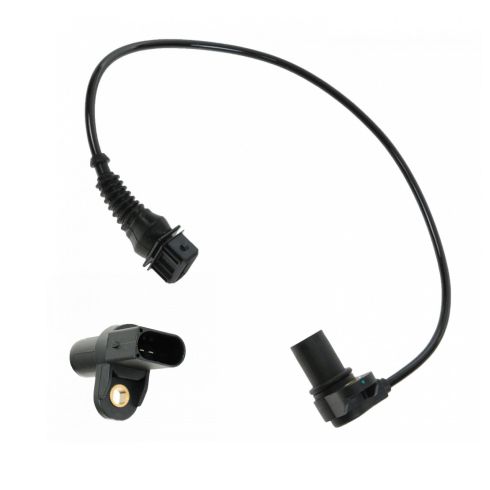
| 1999-2000 | BMW | 323i | BMW 323i 2 Piece Camshaft Position Sensor Set TRQ ESA71377 |
| 1999 | BMW | 323iS | BMW 323iS 2 Piece Camshaft Position Sensor Set TRQ ESA71377 |
| 2001-2006 | BMW | 325Ci | BMW 325Ci 2 Piece Camshaft Position Sensor Set TRQ ESA71377 |
| 2001-2005 | BMW | 325Xi | BMW 325Xi 2 Piece Camshaft Position Sensor Set TRQ ESA71377 |
| 2001-2005 | BMW | 325i | BMW 325i 2 Piece Camshaft Position Sensor Set TRQ ESA71377 |
| 1999-2000 | BMW | 328i | BMW 328i 2 Piece Camshaft Position Sensor Set TRQ ESA71377 |
| 2001-2006 | BMW | 330Ci | BMW 330Ci 2 Piece Camshaft Position Sensor Set TRQ ESA71377 |
| 2001-2005 | BMW | 330Xi | BMW 330Xi 2 Piece Camshaft Position Sensor Set TRQ ESA71377 |
| 2001-2005 | BMW | 330i | BMW 330i 2 Piece Camshaft Position Sensor Set TRQ ESA71377 |
| 2001-2005 | BMW | 525i | BMW 525i 2 Piece Camshaft Position Sensor Set TRQ ESA71377 |
| 1999-2000 | BMW | 528i | BMW 528i 2 Piece Camshaft Position Sensor Set TRQ ESA71377 |
| 2001-2005 | BMW | 530i | BMW 530i 2 Piece Camshaft Position Sensor Set TRQ ESA71377 |
| 2004 | BMW | X3 | BMW X3 2 Piece Camshaft Position Sensor Set TRQ ESA71377 |
| 2001-2004 | BMW | X5 | BMW X5 L6 3.0L 2 Piece Camshaft Position Sensor Set TRQ ESA71377 |
| 1997-1998 | BMW | Z3 | BMW Z3 L6 2.8L 2 Piece Camshaft Position Sensor Set TRQ ESA71377 |
| 1999-2002 | BMW | Z3 | BMW Z3 Roadster L6 2.5L 2 Piece Camshaft Position Sensor Set TRQ ESA71377 |
| 1999-2000 | BMW | Z3 | BMW Z3 Coupe L6 2.8L 2 Piece Camshaft Position Sensor Set TRQ ESA71377 |
| 2001-2002 | BMW | Z3 | BMW Z3 Coupe L6 3.0L 2 Piece Camshaft Position Sensor Set TRQ ESA71377 |
| 2003 | BMW | Z4 | BMW Z4 2 Piece Camshaft Position Sensor Set TRQ ESA71377 |
| Brand Label | Part Number |
|---|---|
| Issyzone | ICMPSBM001 |
| TRQ | ESA94800 |
| Standard Ignition | PC482 |
| Walker Products | 235-1214 |
| autopartsIn | 1802-259939 |
| Walker Products | 235-1206 |
| TRQ | ESA94801 |
| Issyzone | ICRPSMW002 |
| Standard Ignition | PC310 |
| BMW | 1438082F |
| BMW | 12141438081 |
| BMW | 7539165 |
| BMW | 12141435350 |
| BMW | 7518628 |
| BMW | 12141438082 |
| BMW | 12147506276 |
| BMW | 12147539165 |
| BMW | 12147518628 |
| BMW | 12147539173 |
| BMW | 1435350 |
| BMW | 7506273C |
| BMW | 14141438081 |
| BMW | 1438081 |
| BMW | 12147833137 |
| BMW | 12141435351 |
| BMW | 12147506273 |
| BMW | 12147833134 |
| BMW | 14141435350 |
| BMW | 14141438082 |
| Standard Ignition | PC480 |
This item may be interchangeable with parts from other brands with the above part numbers. This information is provided only for reference and does not guarantee that the item you are purchasing is identical to parts with part numbers from the brands listed above. To confirm that this item fits your vehicle, use the above "Check Vehicle Fit" option.
Lifetime Warranty
This item is backed by our limited lifetime warranty. In the event that this item should fail due to manufacturing defects during intended use, we will replace the part free of charge. This warranty covers the cost of the part only.
FREE Shipping is standard on Orders shipped to the lower 48 States (Contiguous United States). Standard shipping charges apply to Hawaii, Alaska and US Territories. Shipping is not available to Canada.
Expedited is available on checkout to the United States, excluding Alaska, Hawaii and US Territories as well as P.O. Boxes and APO/FPO/DPO addresses. Final shipping costs are available at checkout.
Created on:
Tools used
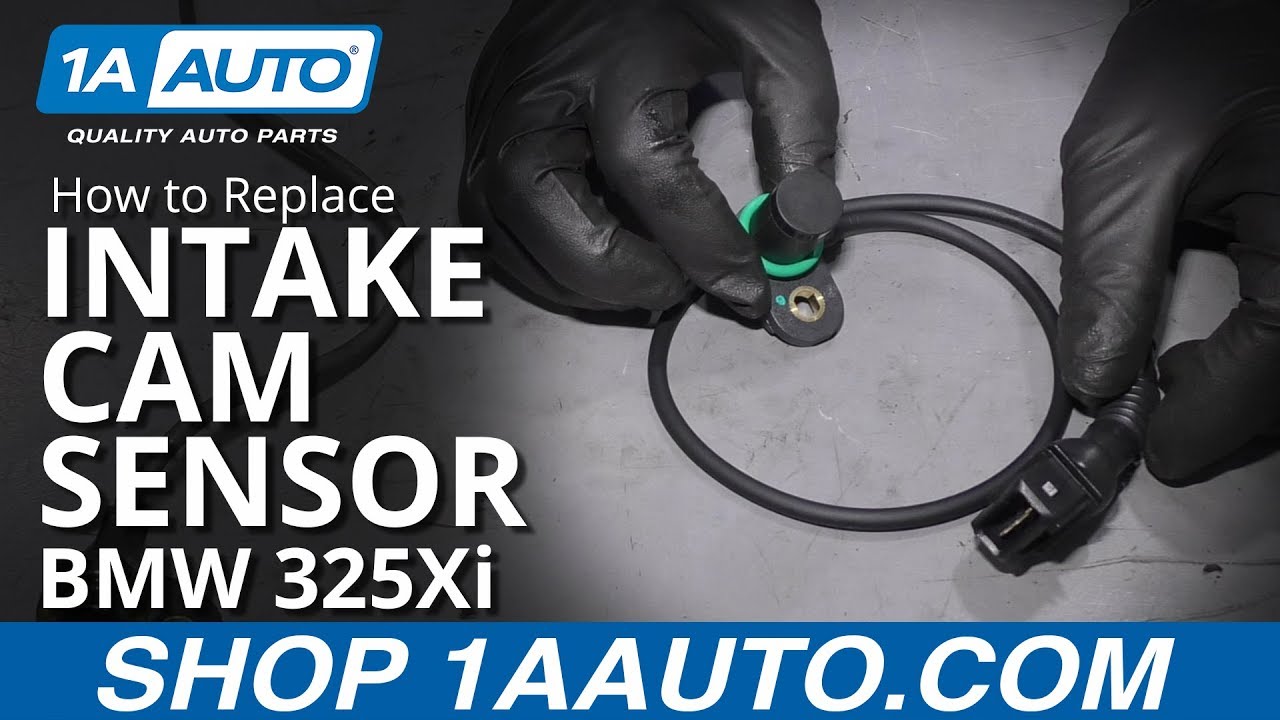
Okay. What's up, guys? I'm Andy from 1A Auto. In this video, I'm going to show you how to replace the intake cam sensor on this 2001 BMW 325xi. If you need this part or other parts for your vehicle, click the link in the description, head over to 1AAuto.com.
With the trunk open over on the right side or the passenger side, there should be a cover that goes right here. This vehicle doesn't have one, but you're going to want to remove that cover. The battery is located right here. First thing I'm going to do is take a 10-millimeter socket and ratchet, loosen up this nut for the negative terminal. When that's loose, slide off the cable, slide it out of the way.
I'm going to take this cover off right here. Take these clips, twist it to the side, just like that. Grab this and slide it out. This weatherstrip might be in the way. It should slide forward and take the cabin filter out. It slides out as well. I need to remove these wires from this housing right here. You can either take the cover off or you can slide it up right there. I like to take this cover off. Just take a screwdriver, slide that off like that, pull that out of the way.
Grab these wires, pull that down, pull this one down. Now I'm going to use a T30 socket, extension, and a ratchet, and I have four screws right there. Take those off. So it's all loose and just slide this panel up. Slide it out of your way. We're going to take this cover off. Normally, you'll have some little covers over here, kind of like these. You just take a screwdriver and pop those out. And then there's two 10-millimeter bolts, I'm going to use a 10-millimeter socket, extension, and a electric ratchet. You can use a regular ratchet if you don't have one. Loosen those up.
Use a magnet, grab my bolts. Grab the cover, slide it off. I'm just going to disconnect this hose right here. Just squeeze the tabs, just try to slide it out. Be careful, generally, these hoses crack, they get pretty brittle. This one's okay. There's a connector right here. We want to disconnect this connector. Push down, just trying to slide it off just like that. Slide that out of the way. The size of the wrench you're going to need to use on this is going to be bigger than 1-1/8. I'm not exactly sure on the size, so I'm just going to use a large adjustable wrench, and then just loosen it up.
Once you loosen it, you should be able to do it by hand and slide it out. There you go. So now I can access the intake cam sensor right there, but I can't get to the connector, so I have to take this airbox out. I going to take these push pins out right here, just going to use some side cutters. Get this center pin, pull that up and then slide it out. Be careful not to cut it. Get those out. Just grab this piece and slide it out. Just going to disconnect this connector to the mass airflow sensor. Push down on this tab, wiggle it out. Take a straight blade screwdriver, loosen up this clamp right here. We should be good. Can push that snorkel off right there. And there's all these clips. Pulling the top of the airbox off, I'm just going to take the top off.
And this last one over here, it's kind of tricky to get to. Pull the dip stick out of the way. And just grab the airbox and the filter out. I'm going to take these two bolts out and use a 10-millimeter socket, extension, and an electric ratchet. You can use a regular ratchet if you don't have an electric one or an air-powered one. Loosen them up, take them out. And just grab the airbox. Slide it up. This wire is on it. There's a little grommet right here, just try to slide that out. All right. Take that off and just slide this out of the way.
So now I can access the connector underneath here. So just push down on the tab. It is the gray wire right there, at least that connector. And now we'll disconnect it up top. All right. To take this bolt out, I'm holding the cam sensor in, I'm going to use a hex key. I'm going to use a five-millimeter hex key. It's a little bit easier than using a socket. There's not a lot of room in here, if you were going to try and get a ratchet in there, so just be patient and take your time, be able to get it up, or if you have a hex bit that will work on a ratchet wrench, then you can use that, or even sometimes they have little socket sets that will work, so you can do that. Whatever works for you.
And once it's loose enough to do it by hand, you can do it by hand. Just take this bolts out. I'll just grab the sensor, try to wiggle it a little bit. I can use some needle nose pliers and just try to pull it out. And it should slide right out, just like that. And we have disconnected underneath, so just fish the wire through, and just slide it up just like that.
Here's the old part. Here's the new intake cam sensor from 1AAuto.com. As you can see, the sensor part is the same, it's the same depth. The wire's the same length. And connector, the connector is the same, has the same tabs and terminals. Get yours at 1AAuto.com and you'll be ready to rock and roll.
Before I install the cam sensor, I just want to wipe the surface area where the cam sensor is going to get installed. Just wipe it down. There's a little bit of dirt right there. All right. That's good. We're just going to fish the wire through here first. Slide this down pretty much the same way it came out. And over near the oil filter housing. All right. So now it's in position. Now we'll reinstall the sensor. You're just going to tip it down like that a little bit. And slide it in position. And just press it down so that it's flush with the head of the engine. So that's good. While I've got the connector down here, I'll plug that in. It's kind of hard to see, but it's plugged in way down here. Just like that. Lock it in place. Now there may be some retainers that held that wire in and there may have been some wire ties. This vehicle did not have those, so keep that in mind when you're taking it out and when you're reinstalling it.
Take the screw, line the screw back up. you might have to wiggle the sensor back and forth to line it up with the hole. And then I'll take that five-millimeter hex bit and my ratchet wrench and tighten it up. And then just snug that bolt down, not too tight. That's good. Take the solenoid, just slide it in position and twist that in. Then I'm going to take my adjustable wrench and just snug this up, not too tight. You really can't get a torque wrench on this. All right. It should be good. Take the connector, slide the connector in position, and lock it in place. Take this hose and just lock that in position too. That's good.
Now we're just going to slide this side of the lower airbox in here. Yours may have something that this connects to. This vehicle doesn't. It just slides into position. And then this lower part slides there. And makes sure these holes are lined up. Take these two bolts, get these started. Take a 10-millimeter socket and a ratchet and tighten these down. I'm using an electric ratchet. If you don't have an electric ratchet, just use a manual one. Get the air filter, reinstall it. I'll take the top part of the airbox, I'm going to slide it onto the snorkel first, just like that. And then there's all these clips, take these clips, lock this part down. Connect the mass airflow sensor or airflow meter. I'm going to slide this clamp right here. Take a straight blade screwdriver and tighten it down, just snug, not too tight. Give it a shake, make sure it's good. Take this piece, slide this into the airbox, just like that. And there's retainers right here. I'll take those push pins and lock them down.
Take this cover, there is some tabs on the backside, so that's going to slide underneath right there. And then take the bolts, install those, take this bolt, get that lined up and the one in the back. Just use a 10-millimeter socket, and just take a ratchet and snug it down. And snug down the back one. And then your vehicle may have covers, so you want to put those covers back on. This one does not have those covers. All right. Now we want to install this. Just get this lined up. You can get these screws started. I'm going to take a T30 socket, extension, and a ratchet, tighten these up. Now reinstall these wires in this cover right here, just like that. Take this cover and line it up. And that's good.
Take the filter. We're going to slide it in with the curved side towards the vehicle, so the bowed side more towards the out of the vehicle. Just slide that in position like that. We'll take this cover, that's going to just slide in underneath this weatherstripping. Just push it in. Get these lock tabs to line up and lock them down. They're spring-loaded, and the last one, and you're good to go.
And we can take the negative side, connect the negative side. Take the same 10-millimeter socket and ratchet, tighten it up. That's good. At this point, if you had that cover, you're going to want to put the cover back where it goes.
Thanks for watching. If you want the parts to do it yourself, check out 1AAuto.com, the place for DIY auto repair.
Tools used
What's up, guys? I'm Andy from 1A Auto. In this video I'm going to show you how to replace this exhaust camshaft position sensor in this 2001 BMW 325xi. If you need this part or other parts for your vehicle, click the link in the description and head over to 1aauto.com.
With the trunk open, over on the right side or the passenger side, there should be a cover that goes right here. This vehicle doesn't have one, but you're going to want to remove that cover. Battery is located right here. First thing I'm going to do is take a 10 millimeter socket and a ratchet, loosen up this nut for the negative terminal. And that's loose. Slide off the cable. Slide it out of the way.
I'm going to take these push pins out right here. Just going to use some side cutters. Get this center pin, pull that up, and then slide it out. Be careful not to cut that. Get those out. Just grab this piece, slide it out. We're going to disconnect this connector right here. Just push down on that, slide that out. Then another connector right here. I'm going to slide the wiring out first, just like that, then the connector will come out. Just slide that to the side like that. I'm going to take a T25 and a ratchet, take this screw out right here.
Just going to use this trim tool from 1aauto.com. Take this push clip out. Get in there. Pull that out. All right, now that is loose. But what we need to do is we need to take the fan off, because the fan has to come out with the shroud as one.
What we need to do to take the fan off is we need to disconnect the fan clutch from the engine side. This is attached to one of the pulleys right there. So sometimes these are somewhat difficult to get off, so what we're going to do is use this tool. We actually sell this at 1aauto.com, with many different sizes. This happens to be the 32 millimeter. That's going to slide on there. And then we slide this on. And with a pneumatic air hammer, we're going to give it a couple bumps, and it's going to loosen up that nut, and we should be able to get it off.
All right, so now I'm going to take the tool. Now this fan clutch happens to be on there reverse thread, so it's going to seem like you're tightening it, but you're actually loosening it. So we'll go like that. Put our air hammer on there. Make sure you wear hearing protection and eye protection.
All right, so that's loose. Took a little bit of effort but I got it. Now you can slide the tool off. Just move it a little bit. There we go. And you should be able to just spin it off like that. Might need the tool once in awhile. Or you could use a wrench that fits, 32 millimeter wrench.
All right, now I'm just going to keep loosening this up. Be careful. You don't want the fan to fall. You don't want it to smash into the radiator. Especially if you're going to reuse the radiator. If you're replacing it, it's not a big deal.
So, as I get closer to the end, I'll just move the fan and just grab the blade. And there we go. Now I can slide this right up. Just like that.
To remove this sensor, I pulled the fan shroud out and the fan. You don't necessarily have to do that to do the sensor, although it's very tight if you're trying to do it. So I'm going to disconnect this connector. There's two tabs on the side here. You can squeeze it real tight with your fingers and try to slide it out, or use some type of needle nose that have a right angle. Squeeze that just like that, and then wiggle the connector out, just like that. Then there's a screw underneath right where the connector connects in. I'm going to use a T30 socket and a ratchet. Get that in there and loosen it up, take it out. All right, slide that screw out.
So this screw was actually very rusty and I couldn't see it too well. I thought it was a T30, of how I needed to get this out. But it's actually a hex head. You could use a hex head bit to get this out. But this one was so rusty I couldn't even tell. But, either way, I got it out.
Now I'm just going to grab the sensor, wiggle it a little, put a little force on it and pull it straight towards the front of the vehicle. And there we go. There it is.
Here's the old part. Here's the new cam sensor from 1aauto.com. The height of this sensor is the same, slightly different look on the face of it, but that's okay. The mounting position is in the same spot. The connector is the same. Get yours at 1aauto.com and you'll be ready to rock and roll.
Just going to take a little bit of engine oil or transmission fluid, just put it around O-ring. That's just going to make it slide in easier without tearing it. Now take the exhaust sensor, cam sensor, and slide it back in position. Just wiggle it a little and push it down. You should be able to get it to line up. Now I'm going to take that bolt with a hex bit, the five millimeter, so I'll install it with the correct tool. Line that up. Take a ratchet. I'm just going to snug that up. Make sure that sensor was all the way down. You don't want to have the bolt snug it in. Just make sure it's all the way down. Take the connector, line the connector up, and lock it in place. And it's good.
So, these have to go on together. Just slide this in position. Once I get this close, I'm going to start to tighten up the fan. Now these fan blades are... The fan clutch is reverse thread, so it's almost like you're going to be loosening it. There's really no easy way to do this. Just do it carefully to get it started. It's a little bit easier. Make sure that fan shroud is in properly. That's good.
All right. If you have the ability to torque this nut for the fan, you're going to torque that between 22 and 29 foot-pounds. I don't really have that ability, so I'm just going to put this tool on there and just give it a little tap. That should be good. Right here there's a push pin that's going to go back in here. Slide that in position. And lock it down. And on this side, we're going to put this screw right here. Then I'm going to use a T25 and a electric ratchet, tighten this down, just snug. I'll position this wiring harness right here and we'll plug the connector in right here. Lock that in place. Take this piece, slide this into the air box, just like that. And there's retainers right here. Take those push pins, lock them down. Then we can take the negative side, connect the negative side. Take the same 10 millimeter socket and ratchet, tighten it up. That's good. At this point, if you had that cover, you're going to want to put the cover back where it goes.
Thanks for watching. Visit 1aauto.com for quality auto parts shipped to your door, the place for DIY auto repair. And if you enjoyed this video, please click the subscribe button.
PERFECT...EXACTLY AS DESCRIBED...THANKS
Easy replacement...perfect fit...so far working fine...no more check engine light...
Muy bien me gusta mucho
Didn't work
Parts arrived a bit slower than past orders. Parts fit perfect. Adding the screw as part of the order would be a good idea as it is recommended to replace with these sensors. Unfortunately 1A doesnt sell them. Otherwise remaining a happy Customer.
It help with my drive.
Parts were exact fit , order came quickly great price
Installed the evening I received the kit and problems resolved. 1k miles and still great. Happy with the 1A service and product quality.
Items were as described and delivered in a timely manner. Price was the best I found on the net.
The replacement cam sensors for my 2001 BMW 330xi were the exact replacement and fixed the check engine light at a great price, I would purchase again.

ESA71377
I installed an a 2001 3.0 which I believe is a m54
Yes
